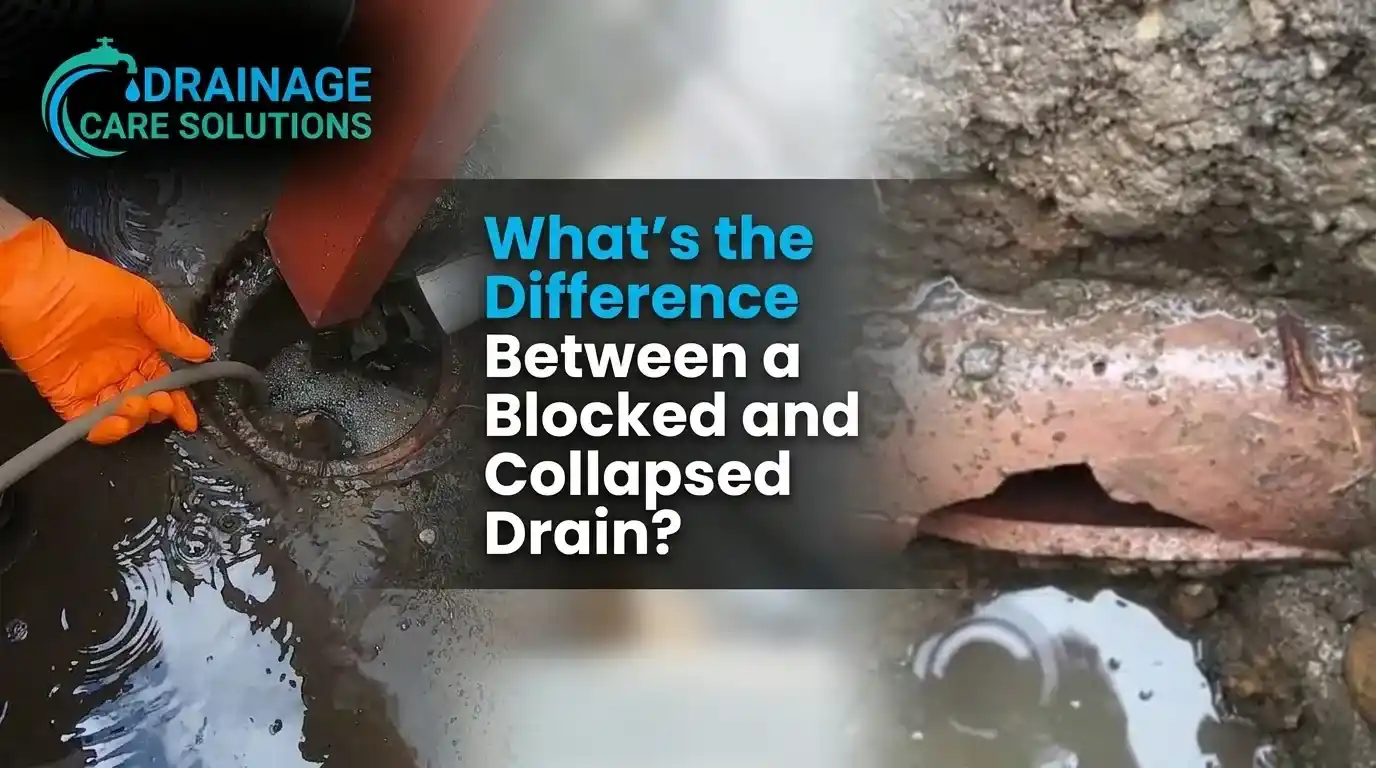
A landlord in Boscombe called us last winter about a drain that “kept blocking no matter what.” Three rod-and-jet visits from a previous contractor. The kitchen sink would clear for a fortnight then back up again. We ran a CCTV survey the same morning and the camera showed it within twenty seconds. A pitch fibre pipe from the 1960s had deformed into a sliver-shaped collapse just past the inspection chamber. No amount of jetting was going to fix that.
This is the heart of the blocked drain vs collapsed drain question. The collapsed drain signs and the symptoms of a routine blockage often look identical from the kitchen sink. The causes do not match, and neither do the repairs. This guide is for UK homeowners, landlords, and letting agents who want to understand what’s actually happening underground before authorising work.
What Are the Most Common Collapsed Drain Signs?
The most common collapsed drain signs are repeated blockages within days or weeks of clearing, multiple drains backing up at once, foul sewage smells outdoors, sinkholes or soft patches in the garden, slow drainage across the whole property, and gurgling sounds that persist after rodding. Any of these points beyond a simple obstruction toward structural pipe failure.
A blocked drain is an obstruction inside a structurally sound pipe. A collapsed drain is physical damage to the pipe itself. The treatment is completely different.
Warning Signs That Suggest Structural Failure
- Blockages return within days of clearing.
- Multiple fixtures drain slowly at once.
- Sewage odours in the garden, especially after rain.
- Wet patches or sinkholes above the drain run.
- Lush green stripes of grass following the pipe line.
- Rodent activity near manholes or gullies.
- Water level in the inspection chamber stays high.
If three or more of these match your property, you’re almost certainly looking at structural damage rather than a simple obstruction.
How Can I Tell if My Drain Is Collapsed?
You can tell a drain is collapsed if blockages keep recurring after professional clearing, if more than one drain runs slowly, if water sits in the inspection chamber for hours after use, or if a sinkhole or soft ground appears above the drain line. The only definitive answer comes from a CCTV drain survey that visually confirms the damage.
The Three-Test Diagnostic
A simple field check before booking an engineer:
Test 1: The recurrence test.
Has the same drain blocked twice within the past three months? A pipe that keeps blocking has more than just debris causing the problem.
Test 2: The multiple-fixture test.
Run the kitchen tap, flush the upstairs toilet, run the bath. If two or more drains slow simultaneously, the issue sits in the shared run, not the fixture.
Test 3: The inspection chamber test.
Lift the manhole cover after running water. If the water level rises and stays high, the run beyond the chamber is restricted.
These collapsed drain signs are common across older Bournemouth properties where Victorian clay pipes have shifted or pitch fibre drainage from the 1950s and 1970s has deformed.
Can Tree Roots Damage My Drains?
Yes, tree roots are one of the most common causes of UK drain damage. Roots seek moisture and follow water vapour leaking from existing pipe joints or hairline cracks. Once inside, they expand with growth, eventually causing partial or complete collapse. Willow, oak, poplar, and Leylandii are the worst offenders in UK gardens.
How Root Damage Develops
The progression is predictable. A small crack in a clay or pitch fibre drain releases water vapour. Roots detect the gradient and grow toward it. They enter through the joint or crack, expand inside the pipe, and form a mesh that catches debris.
What looks like a fat or wipe blockage is often a root mass holding everything in place. Jetting clears it temporarily. The roots regrow within months. This recurring pattern is one of the clearest collapsed drain signs of underlying structural damage.
Tree Species Most Likely to Cause Drain Damage
- Willow (worst offender, aggressive root system).
- Poplar (extensive lateral roots).
- Oak (deep and wide root spread).
- Leylandii hedging (surprisingly invasive).
- Sycamore (moderate risk on older properties).
If you have any of these within ten metres of a drain run on clay or pitch fibre pipework, root ingress is likely already underway.
What Does Drain CCTV Inspection Show?
A drain CCTV inspection shows the internal condition of underground pipework in real time. It identifies cracks, fractures, root ingress, pitch fibre deformation, displaced joints, collapsed sections, scale build-up, and the exact location and depth of defects. UK drainage engineers code findings using the WRc Manual of Sewer Condition Classification and BS EN 13508-2 standards.
What a Survey Report Includes
- Recorded video footage of every drain run.
- Defect coding to WRc standard with severity grades.
- Plan drawing showing pipe location and depth.
- Repair recommendation with explanation of options.
- Date-stamped report suitable for insurance or homebuyer survey.
Why CCTV Beats Guesswork
Without a camera, drainage diagnosis is educated estimation. The camera takes guesswork out completely. You see what’s actually inside the pipe rather than paying for repeat clearance jobs that never address the cause. Professional standards promoted by the National Association of Drainage Contractors help ensure drainage surveys and repair work follow recognised UK industry practices.
For property buyers in Bournemouth, a pre-purchase drain survey is one of the cheapest forms of due diligence available. Spotting collapsed drain signs before you exchange contracts can save thousands in unexpected post-completion repairs.
What Causes Drains to Collapse in UK Properties?
UK drains collapse for several predictable reasons: age-related deterioration of Victorian clay pipes, pitch fibre pipe deformation from the 1950s to 1970s era, tree root ingress exploiting existing cracks, ground movement from heavy vehicle loading or subsidence, and unauthorised building over existing drain runs without proper support.
Pipe Materials Most Likely to Fail
- Pitch fibre (1950s to 1970s installations, deforms into sliver shape).
- Victorian clay (cracks, displaces at joints over time).
- Cast iron (corrodes from inside).
- Concrete (cracks under pressure).
Modern PVC drainage introduced from the 1980s onwards is far more resistant to collapse but can still fail under ground movement or heavy compaction.
Ground Conditions That Accelerate Collapse
Shrinkable clay soils common across southern England put cyclical stress on pipes during wet-dry seasons. Sandy soils found in Bournemouth, Poole, and Christchurch allow ground migration around poorly bedded pipes. Made-up ground on infill sites settles unevenly and stresses joints. These conditions are responsible for many of the collapsed drain signs we see across the BH postcode area.
Does Home Insurance Cover Drain Damage?
UK home insurance sometimes covers drain damage, but the scope varies significantly between policies. Most insurers cover accidental damage, subsidence-related collapse, and escape of water events. Wear and tear, root ingress, and general blockages are usually excluded. A CCTV survey report with WRc condition grading is often required as evidence.
What’s Usually Covered
- Subsidence damage to underground pipework.
- Accidental damage from third-party works.
- Escape of water consequences.
- Trace and access costs for hidden leaks.
- Alternative accommodation during major repairs.
What’s Usually Excluded
- General wear and tear.
- Tree root ingress (often excluded as a maintenance issue).
- Gradually operating causes.
- Pre-existing damage discovered after purchase.
- Damage from misuse such as wipes or fats flushed regularly.
Read your policy schedule carefully. Collapsed drain signs caused by gradual deterioration are often the hardest claims to substantiate without a properly coded CCTV report.
How Are Collapsed Drains Repaired in the UK?
Collapsed drains in the UK are repaired using one of three methods: trenchless lining (also called CIPP, cured-in-place pipe), patch lining for localised damage, or excavation and replacement where damage is too severe for lining. The right choice depends on pipe condition, location, and access. A CCTV survey determines which option works.
Repair Options Compared
Trenchless lining (CIPP):
No digging needed in most cases. A resin liner cures inside the existing pipe. Suitable for cracks, partial collapse, and root damage.
Patch lining:
Targets a single defect rather than the whole run. Faster than full lining and works on short damaged sections.
Excavation and replacement:
Required for full collapse or severe deformation. More disruption but the only option for some scenarios. Often combined with upgrading to modern PVC.
Build Over Agreements
If your damaged drain runs under a conservatory, extension, or driveway built over it without a Build Over Agreement with the water authority, repair options can become complicated. Always check whether previous building work over a drain run was properly consented before excavation begins.
Acting on Collapsed Drain Signs Before Damage Spreads
Most drain collapses develop gradually. The recurring blockages, slow runs, and sewage odours that point to collapsed drain signs are usually visible months before the pipe fully fails. Acting on early indicators turns a manageable lining job into a much smaller bill than the full excavation that follows a complete collapse.
If anything in this guide describes what’s happening at your property, get a proper diagnosis before authorising more repeat clearance work. Drainage Care Solutions provides honest, same-day assessments across Bournemouth, Poole, Christchurch, and the BH postcode area. Call or book a drainage assessment today.
Common Questions About Collapsed Drain Signs Answered
How Quickly Does a Collapsed Drain Need Fixing?
A fully collapsed drain needs same-day or next-day attention to prevent sewage backup, ground contamination, and structural undermining of nearby foundations. A partial collapse can wait days rather than hours but should not be left more than a few weeks. Recurring collapsed drain signs that worsen between visits indicate damage progressing actively.
Can A Blocked Drain Become a Collapsed Drain?
Yes, an unresolved blocked drain can lead to a collapsed drain over time. Repeated pressure from blockages combined with hydraulic stress during attempted clearance can stress weakened pipes to failure point. Older clay and pitch fibre drains are especially vulnerable. This is why repeated blockages should trigger a CCTV survey rather than continued jetting.
Who Pays for Collapsed Sewer Pipe Repairs in the UK?
Responsibility depends on where the damage sits. Pipes within your property boundary serving only your home are your responsibility. Shared drains and lateral drains beyond your boundary are usually the water company’s responsibility under the Water Industry Act 1991. In our area, Wessex Water maintains the adopted sewer network. Always check boundaries before authorising work.
Will A CCTV Drain Survey Damage My Pipes?
No, a CCTV drain survey causes no damage. The camera head is small and flexible, designed specifically for navigating drains without contact damage. Surveys are routinely carried out on properties of all ages including Victorian clay systems. The only equipment in contact with the pipe is the camera itself and any cleaning water needed beforehand.
How Do I Prevent Collapsed Drain Signs from Getting Worse?
Prevent worsening collapsed drain signs by booking a CCTV survey as soon as recurring blockages appear, avoiding planting trees with aggressive root systems near drain runs, never disposing of fat or wipes through sinks or toilets, and arranging periodic maintenance jetting for older clay or pitch fibre pipework. Early intervention is always cheaper than reactive repair.