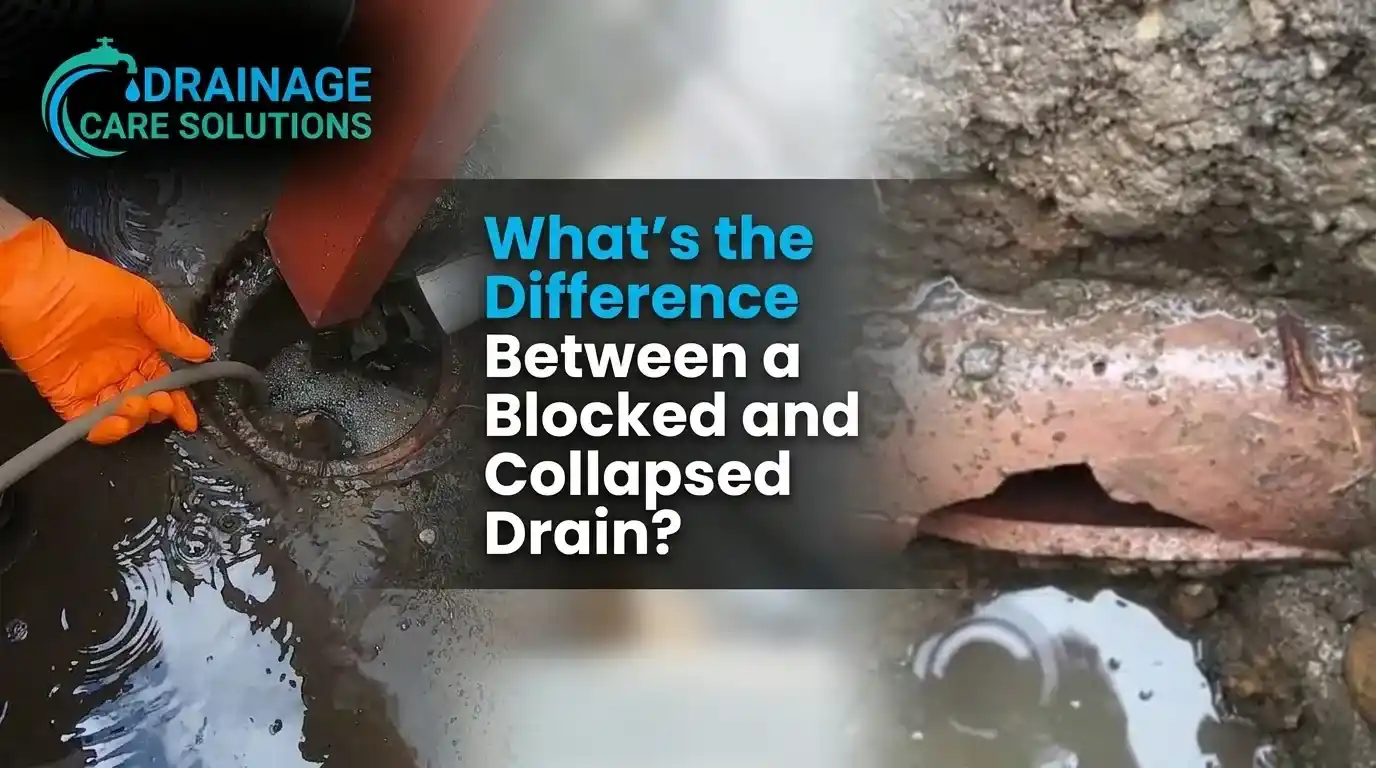
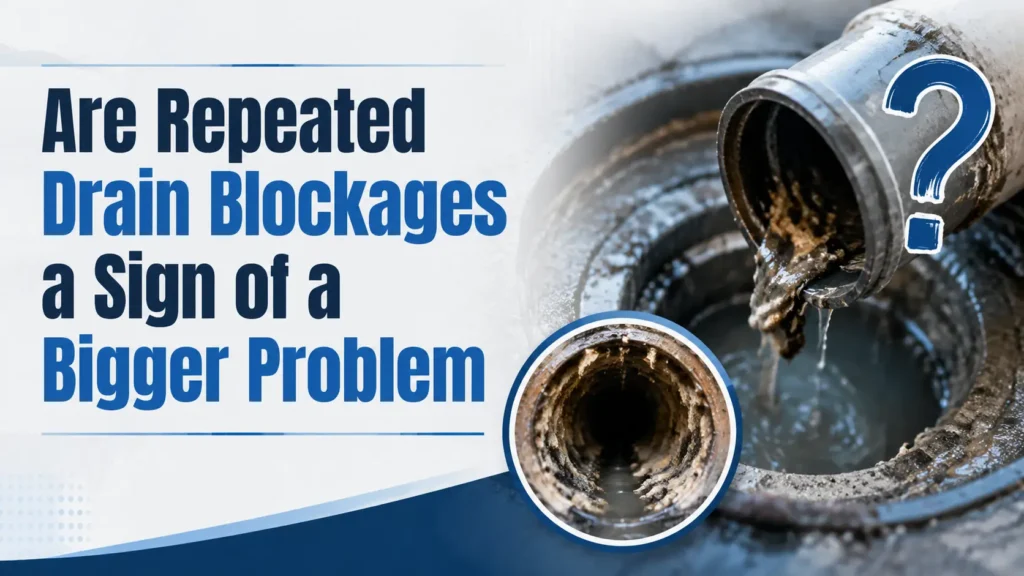
A single blocked drain is an inconvenience. A drain that keeps blocking again and again, despite being cleared, is something else entirely and it deserves more than another bottle of drain cleaner.
For homeowners and landlords across Bournemouth, recurring drain blockages are one of the most common drainage complaints we encounter at Drainage Care Solutions. And in the majority of cases, the pattern of repetition is not bad luck. It is the drainage system trying to tell you something more serious is going on beneath the surface.
This guide explains exactly why repeated drain blockages happen, what the warning signs of a deeper problem look like, when professional intervention is necessary, and crucially, how to break the cycle for good.
Why Does a Drain Keep Blocking After It Has Been Cleared?
This is the question that frustrates most homeowners. You clear the blockage, the water flows again, and then within days or weeks the same problem returns. What is going wrong?
The answer usually comes down to one of two things: the blockage was never fully removed in the first place, or the underlying condition that caused the blockage, structural damage, root ingress, poor gradient has not been addressed.
When a drain is partially cleared, a narrow channel may open through the obstruction. Water passes through well enough for things to seem fine, but the remaining build-up of grease, silt, roots, or debris is still coating the inside of the pipe. That rough surface then catches fresh material far more easily than a clean pipe would. The process repeats, and the blockage returns faster each time.
The Most Common Causes of Recurring Drain Blockages
Understanding what causes a blockage to keep coming back is the first step toward preventing it. Here are the most frequently encountered causes across Bournemouth properties.
Grease, Fat, and Oil Build-Up
This is the most common cause of recurring kitchen drain problems. Cooking fats, oils, and grease go down the sink as warm liquids but cool and solidify inside the pipework. Once they cling to the pipe walls, they create a sticky surface that catches food particles, soap residue, and other debris.
The build-up narrows the pipe diameter over time. Water may still pass through initially, but increasingly slowly. The reduced opening makes the pipe prone to catching more material, and the cycle accelerates. Even if the visible blockage is cleared, a thick coating of grease may remain on the inside of the pipe, invisible until it causes the next blockage.
Hair and Soap Residue
Bathroom drains, particularly showers and baths, commonly suffer from recurring blockages caused by hair and soap scum. Hair binds together into a tangled mass that lodges at the trap, plughole, or pipe bends. Soap residue creates a sticky film around it that traps lint and product build-up, compounding the obstruction over time.
A drain guard can help at the surface, but if hair has already moved further into the pipework, surface cleaning alone may not be sufficient.
Wet Wipes and Non-Flushable Items
Despite what packaging sometimes claims, wet wipes do not break down in drainage systems the way toilet paper does. They combine with grease, hair, and waste to form dense obstructions that can partially block a drain and catch more material with every flush. Sanitary products, cotton pads, paper towels, and similar items cause the same problem.
Once one of these items lodges in the drain, it creates a point of resistance that will cause recurring blockages until it is fully removed.
Tree Root Ingress
Tree roots are one of the most damaging causes of recurring outdoor drain problems and one of the hardest to identify without professional equipment. Roots are drawn to moisture and can penetrate drainage systems through hairline cracks, open joints, or weakened sections of older clay or pitch fibre pipework.
Once inside the pipe, roots grow steadily and trap debris, silt, and waste as it passes. Clearing the blockage without removing the root mass provides only temporary relief. The roots remain and the problem returns, usually worsening over time.
Collapsed, Cracked, or Misaligned Pipework
Physical damage to pipework is a major cause of recurring blockages that no amount of manual clearing can fix. A cracked pipe, displaced joint, or partially collapsed section creates an internal obstruction, a ridge, a gap, a narrowing, where waste catches and builds up repeatedly.
Properties built between the 1950s and 1970s, common throughout Bournemouth areas such as Moordown, Wallisdown, and Winton, often have pitch fibre drainage that has deformed or degraded over decades. Victorian clay pipes in older properties can shift, crack, or lose joints as ground conditions change.
Poor Pipe Gradient
Water and waste rely on gravity to flow through your drainage system. For this to work correctly, pipes need to be installed at the right angle of fall. If a section of drain has too shallow a gradient, waste can slow down and settle before it has moved far enough along the system. If the gradient is too steep, water can race ahead and leave solids behind.
Pipes can also develop what engineers call a “belly”, a section that has sagged or dropped over time, creating a low point where waste and water pool. This point becomes a consistent trap for debris and leads to blockages that return in exactly the same location each time.
Warning Signs That a Bigger Problem Exists
Not every slow drain points to a serious underlying issue, but certain combinations of symptoms are strong indicators that something more significant needs attention.
You should be taking the problem more seriously if you notice:
- The same drain blocks again within days or weeks of being cleared
- Multiple drains or fixtures are slowing down at the same time
- Water backs up into sinks, baths, or shower trays
- Gurgling sounds come from plug holes or toilets when water drains elsewhere in the house
- A persistent foul smell returns from plug holes or outside gullies, even after cleaning
- Outside drains fill with water and drain slowly or overflow
- Blockages worsen noticeably after heavy rainfall
- There are large trees or established hedgerows growing near your drains
Any one of these signs on its own may point to a simple build-up. Several of them occurring together, or any of them recurring repeatedly, strongly suggests a structural issue inside the drainage system that requires professional investigation.
Why DIY Fixes Do Not Break the Cycle
Plungers, drain rods, chemical cleaners, and boiling water all have their place for minor surface-level blockages close to the plug hole. The problem is that they rarely resolve recurring blockages that have a deeper cause.
Chemical drain cleaners, in particular, are worth approaching carefully. They may dissolve enough of a blockage to restore flow temporarily, but they typically cannot remove deep grease coating, root masses, or physical obstructions. Used repeatedly in older pipework, common in many Bournemouth properties, they can also accelerate deterioration of the pipe material itself.
The Role of CCTV Drain Surveys in Diagnosing the Cause
When a blockage keeps coming back and the reason is not obvious from the surface, a CCTV drain survey is often the most practical and cost-effective next step.
A CCTV survey involves passing a camera through the drainage system to inspect it from the inside. It allows the engineer to see exactly what is happening inside the pipework, the location and nature of any blockage, the condition of the pipe walls, the presence of root ingress, displaced joints, cracks, collapses, or areas of poor gradient.
This matters because many of the causes of recurring blockages are simply invisible from the surface. Without a camera inspection, there is no reliable way to distinguish between a grease build-up that needs jetting and a collapsed pipe section that needs repair. Treating the wrong cause will not solve the problem.
When Recurring Blockages Become Urgent
In most cases, recurring drain blockages are a persistent nuisance rather than an immediate emergency. However, certain situations call for urgent attention.
Contact a drainage engineer without delay if:
- Sewage is backing up into sinks, baths, showers, or toilets inside the property
- Foul water is overflowing from an outside drain or manhole
- The only usable toilet in the property has become blocked
- Several fixtures stop working simultaneously
- Water is flooding inside the property during normal use or rainfall
These situations indicate a serious failure somewhere in the drainage system and require emergency drain repair rather than routine maintenance. Drainage Care Solutions provides same-day emergency attendance across all Bournemouth BH postcode areas, day and night.
Who Is Responsible for a Blocked Drain?
This question matters particularly for landlords and tenants in Bournemouth’s substantial rental property market.
As a general rule, if a blocked or damaged drain sits entirely within your property boundary and serves only your property, it is your responsibility as the homeowner or landlord to maintain and repair it. If the drain is shared with neighbouring properties or forms part of the public sewer network, responsibility typically falls to the relevant water company, in this area, Wessex Water.
Landlords have a legal obligation under Section 11 of the Landlord and Tenant Act 1985 to keep drainage systems in rental properties in proper working order. Repeated blocked drains that stem from a structural fault within the property should be investigated and repaired, not simply cleared repeatedly and left.
If you are unsure whether the problem is on your private system or part of the shared network, a drainage engineer can help identify where the fault appears to be and advise on the appropriate next steps.
How to Reduce the Risk of Future Blockages
While structural problems require professional repair, many recurring blockages are preventable with better everyday habits and straightforward maintenance.
In the kitchen:
- Avoid pouring fats, oils, or grease down the sink under any circumstances
- Scrape plates fully into the bin before washing up
- Use a sink strainer to catch food particles
- Run hot water through the drain for a minute after washing up to help carry any residue further through the system
In the bathroom:
- Fit drain guards in showers and baths to catch hair before it enters the pipe
- Clean plughole guards regularly so they do not become a blockage in themselves
- Put wet wipes, cotton pads, and sanitary products in the bin rather than flushing them
Outdoors:
- Clear leaves and garden debris from gully covers and drain grids regularly, especially in autumn
- Keep an eye on plants and hedgerows near your drainage runs
- Check outside drains after periods of heavy rain
For properties with a history of recurring problems, an annual drain inspection can identify the early signs of root ingress, pipe deterioration, or build-up before they develop into a serious blockage. This is especially valuable for older Bournemouth properties with clay or pitch fibre drainage.
When Should You Call a Drainage Engineer?
If you are asking this question, the answer is usually: now.
You should call a professional drainage engineer, rather than attempting another DIY fix, when:
- The same blockage has returned more than once after clearing
- More than one drain is affected at the same time
- You can smell persistent odours from your drains
- Water is backing up or draining exceptionally slowly
- An outside drain is overflowing or pooling water
- You suspect structural damage, root ingress, or collapsed pipework
- You are buying or selling a property and want the drains professionally inspected
Drainage Care Solutions covers all BH postcode districts across Bournemouth, Boscombe, Southbourne, Charminster, Winton, Kinson, Westbourne, and surrounding areas. Our engineers attend with high-pressure jetting equipment and CCTV survey cameras on every visit, meaning we can both clear and diagnose in a single call wherever possible.
Our Services for Recurring Drain Problems
We offer the full range of services needed to identify and resolve the underlying cause of repeated drain blockages:
- Blocked Drains Bournemouth: High-pressure water jetting to fully clear grease, silt, hair, and root mass from pipes, gullies, and manholes
- CCTV Drain Surveys: Camera inspection to identify the precise cause of recurring problems, including cracks, root ingress, collapsed sections, and poor gradient
- Emergency Drain Repairs: Same-day attendance for urgent drainage failures, including collapsed drains, sewage backup, and pipe fractures
- Soakaway Repair and Replacement: Where surface water drainage problems are causing garden flooding or repeated gully overflow in Bournemouth’s sandy soil conditions
Every job begins with a thorough assessment before any work starts. We explain what we have found and what we recommend before a single tool is picked up. No assumptions. No guesswork.
Frequently Asked Questions
Can a drain block repeatedly even if nothing has changed in my habits?
Yes. If the pipework is damaged, has root ingress, or is deforming due to age, as is common with pitch fibre systems in many Bournemouth properties. Blockages will recur regardless of what goes into the drain. The structural condition of the pipe itself is the cause.
Will high-pressure jetting fix a recurring blockage permanently?
It depends on the cause. Jetting is highly effective at removing grease, silt, root masses, and debris, and in many cases provides a long-lasting result. However, if the underlying cause is a collapsed pipe, displaced joint, or severe root ingress through a damaged section, jetting treats the symptom. Repair or relining of the affected section is the lasting solution.
Is a CCTV drain survey always necessary for a recurring blockage?
Not always. If the cause is clearly identified, for example, a kitchen drain that keeps blocking due to grease in a property with good pipework, jetting may resolve it fully. A CCTV survey becomes essential when blockages return quickly.
My outside drain keeps overflowing after heavy rain. Is that a blockage or a bigger problem?
It could be either, or both. An outside drain that overflows during rainfall may have a blockage that reduces its capacity to handle the volume of water. It could also indicate a problem with the soakaway or surface water drainage system.
How quickly can Drainage Care Solutions attend?
We offer same-day attendance for drainage emergencies across all BH postcode areas. For routine drain surveys and non-emergency unblocking, we book at the earliest available time that suits you. Call us on 07717 561588 to check availability.
The Bottom Line
If your drains keep blocking, the blockage is not the problem, it is the symptom. The real problem is whatever is causing the blockage to return, and that cause will not go away by itself.
Whether it is grease coating the inside of your kitchen pipework, a root mass that has established itself in a cracked clay pipe, a section of pitch fibre drain that has collapsed, or a displaced joint that catches every piece of waste passing through. The solution is to identify it, then fix it properly.
At Drainage Care Solutions, that is exactly what we do. We are Bournemouth’s local drainage specialists, serving homeowners, landlords, and businesses across every BH postcode district with honest assessments, fully equipped engineers, and drainage work carried out to a standard that means you do not need us to come back for the same problem.