There’s a particular kind of irritation that comes from standing ankle-deep in your own grey, soapy water halfway through a shower. The water that should be vanishing down the plughole is instead rising around your feet — and you know exactly what that means. A blocked shower drain. The good news is that most blockages are fixable, often without calling anyone out. The trick is knowing what’s causing it and tackling it the right way, because the wrong approach can make things worse. Drawing on years of clearing drains across Bournemouth, the team at Drainage Care Solutions has put together this straightforward guide to sorting a blocked shower drain in Bournemouth — what causes it, how to fix it yourself, and when it’s time to bring in a professional.
What Causes a Blocked Shower Drain?
Nearly every blocked shower drain comes down to the same handful of culprits, usually working together.
Hair — the Main Offender
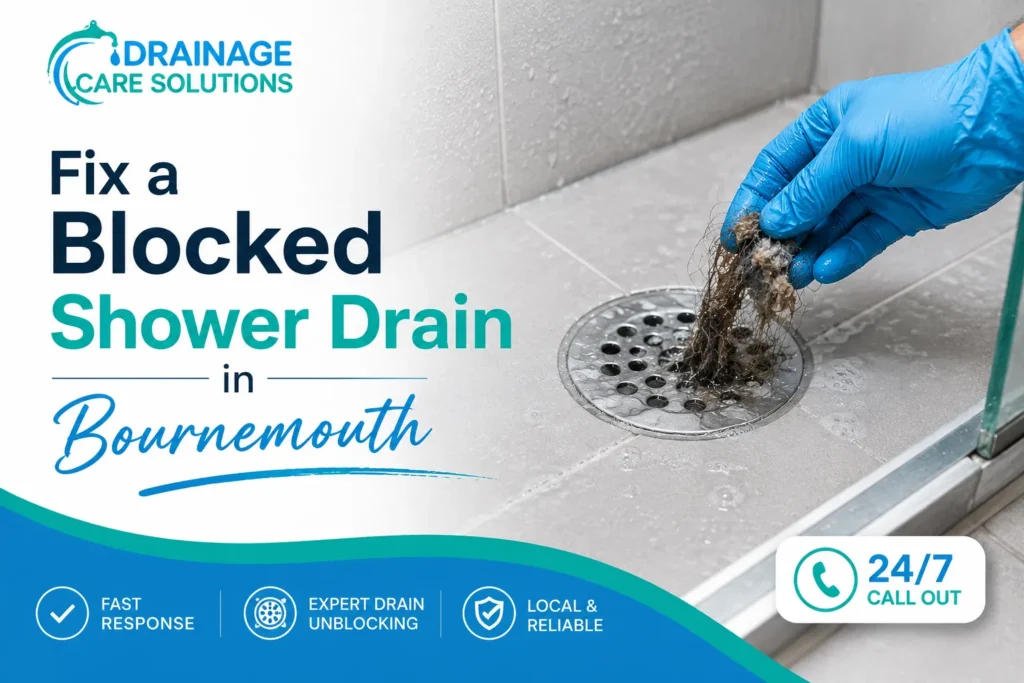
Hair is behind the vast majority of shower blockages. Strand by strand it slips down the plughole, snags on the waste pipe, and knits together into a dense mat that traps everything else passing through. On its own it’s a nuisance; combined with the next two, it’s a proper clog.
Soap Scum and Grease
Traditional soaps and thick shower products leave a sticky residue that clings to the inside of your pipes. This soap scum binds the hair together and narrows the pipe over time, slowing the flow until water can barely pass.
Limescale — the Bournemouth Factor
Here’s the local angle. Much of the Bournemouth area sits on chalk and has hard water, which means limescale build-up is more common than in soft-water regions. Over the years, limescale narrows pipework and gives soap scum and hair even more to cling to — so blockages form faster here than many homeowners expect.
How to Fix a Blocked Shower Drain Yourself
For a minor blockage, you can usually clear a blocked shower drain in Bournemouth with a few simple steps. Work through them in order:
- Remove visible hair. Lift the plughole cover and pull out any hair you can reach with gloved fingers, tweezers, or a bent piece of wire. This alone solves a surprising number of blockages.
- Flush with hot water. Pour a kettle of hot — not boiling — water down the drain to help melt soap and grease. Boiling water can damage some plastic pipes, so let it cool slightly first.
- Try baking soda and white vinegar. Tip a few tablespoons of baking soda down the drain, follow with an equal amount of white vinegar, leave it to fizz for 15–20 minutes, then flush with hot water. It’s a gentle, pipe-safe way to break down residue.
- Use a plunger. A cup plunger over the plughole, with a little water in the tray to form a seal, can shift a stubborn clog with a few firm pumps.
- Reach for a drain snake. A flexible drain snake (or even a straightened wire coat hanger) pushed into the pipe can hook out or break up a deeper hair clog.
Work through these and most everyday blockages will clear. If the water still won’t drain, the problem is deeper than the trap — and that’s where DIY reaches its limit.
A Word on Chemical Drain Cleaners
It’s tempting to reach for a strong chemical cleaner, but we’d urge caution. Harsh chemicals can damage older pipework — common in many Bournemouth properties — and they often punch a narrow hole through a clog rather than clearing it, so the blockage soon returns. They’re also harsh on the environment. Mechanical clearing is safer and more effective in almost every case.
When to Call a Professional
Some blockages simply won’t budge, and pushing on with DIY can do more harm than good. It’s time to call a drainage engineer if:
- The blockage keeps coming back despite your best efforts.
- More than one drain in the house is slow or backing up at the same time.
- There’s a persistent foul smell, suggesting a problem deeper in the system.
- Water is backing up into other fittings, like the toilet or sink.
In these cases, a professional will clear the blockage properly using drain rods or high-pressure water jetting, and for recurring problems, a CCTV drain survey pinpoints the exact cause below ground. If several drains are affected, it may point to a wider issue best handled through our blocked drains service rather than a quick fix at the plughole.
How to Prevent It from Happening Again
Prevention is far easier than a cure. A few simple habits stop most blockages before they start:
- Fit a drain guard or hair catcher over the plughole and empty it regularly.
- Remove trapped hair every week or two rather than letting it accumulate.
- Avoid washing thick oils, waxes, or heavy products down the drain.
- Flush the drain with hot water every so often to keep residue moving.
In a hard-water area like Bournemouth, the occasional descaling flush also helps keep limescale in check.
Who’s Responsible for the Blockage?
One last thing worth knowing. A blocked shower drain inside your property is your responsibility as the homeowner. But if the blockage turns out to be in a shared drain or the public sewer, it usually falls under Wessex Water — and they may clear it at no cost to you. A reputable drainage company will always check this before charging you for work that isn’t yours to pay for.
Still Blocked? We Can Help
Most shower blockages give way to a bit of patience and the right method. But if you’ve tried the steps above and the water still won’t drain — or it keeps coming back — there’s likely something deeper going on that’s worth sorting properly. Drainage Care Solutions clears blocked drains across Bournemouth and the BH postcodes, with fully qualified, insured engineers and honest, upfront pricing. If your shower drain has beaten you, get in touch for fast help and a free quote — we’ll have the water flowing again in no time.
Frequently Asked Questions
What causes a blocked shower drain?
Hair bound together with soap scum and grease is the usual cause. Bournemouth’s hard water adds limescale, which makes blockages form faster.
How do I know if my shower drain is blocked?
Water pooling at your feet, slow drainage, gurgling sounds, and a smell from the plughole are the main signs.
Can I unblock a shower drain myself?
Often, yes. Removing hair, a hot-water flush, baking soda and vinegar, or a drain snake clears most minor blockages.
Should I use chemical drain cleaners?
Best avoided. They can damage older pipework and often don’t clear the clog fully. Mechanical methods are safer.
Why does my shower drain keep blocking?
Recurring blockages usually mean it was never fully cleared, or there’s a deeper issue worth investigating with a camera survey.
How do professionals clear a blocked shower drain?
With drain rods or high-pressure water jetting, plus a CCTV survey for stubborn or repeat blockages.
How much does it cost to clear a blocked shower drain in Bournemouth?
It depends on severity, but a reputable firm gives a clear quote upfront after assessing the problem.