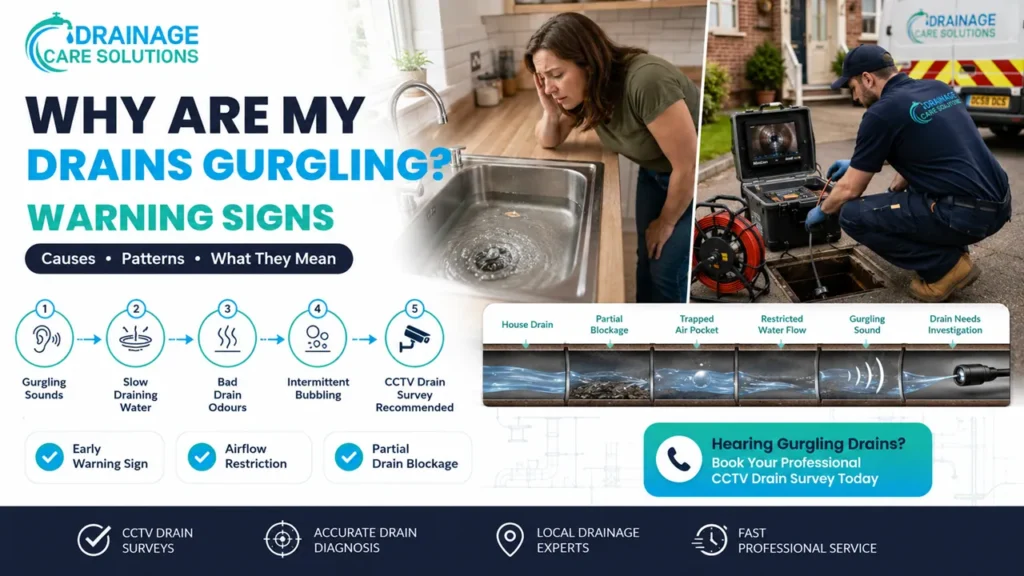
If you are wondering why are my drains gurgling, the sound usually means wastewater and air are not moving freely through part of the drainage system. One noisy sink may indicate a local waste-pipe restriction. Several connected fixtures reacting together can point towards a deeper drain problem or disrupted drainage ventilation.
The noise alone cannot confirm the cause. Its location, timing and accompanying symptoms provide the more useful clues. Drainage Care Solutions investigates gurgling drains for homeowners, landlords and businesses across Bournemouth and surrounding areas.
First, Notice What Happened Before the Noise
A gurgle is created when air moves through water in a trap or partially restricted pipe. The fixture that was used immediately before the sound can help identify which sections of pipework are interacting.
1. The Same Fixture Was Emptying:
A sink that gurgles as its own water drains may have a restriction near its trap or branch waste pipe.
2. Another Fixture Triggered It:
A basin that gurgles when the toilet flushes suggest the two fixtures share part of the drainage route.
3. An Appliance Triggered It:
A sink reacting when a washing machine empty may indicate that its sudden discharge is meeting restricted flow further along the connected waste pipe.
The gurgling identifies disturbed airflow. It does not reveal whether the underlying cause is grease, hair, a poorly vented system or an underground defect without further checks.
Use the Noise Pattern to Narrow the Search
The table below is not a diagnosis. It shows which part of the drainage system may deserve closer attention.
| Gurgling Pattern | Possible Area of Concern | Other Signs to Check |
| One sink or shower gurgles | Trap or local branch waste pipe | Slow emptying, residue or smells |
| Toilet gurgles after flushing | Toilet branch, soil pipe or venting | Changing bowl level or weak flush |
| Sink reacts when toilet flushes | Shared connection downstream | Both fixtures draining slowly |
| Toilet bubbles when bath empties | Shared soil or waste route | Water movement in the toilet bowl |
| Several fixtures gurgle | Main drain, soil stack or ventilation | Outside gully holding water |
| Lowest fixture reacts first | Restriction further downstream | Backup into shower or floor drain |
| Noise follows heavy rain | Existing restriction under increased flow | Full gullies or standing water |
| Gurgling returns after clearing | Remaining build-up or pipe defect | Recurring slow drainage |
Where gurgling appears with slower flow or an outside chamber filling, the next step may involve investigating a developing drain blockage rather than treating the noise in isolation.
When Only One Fixture Makes the Sound
A single affected fixture often points towards a local issue, particularly when every other drain works normally.
A kitchen sink may collect grease, food residue and scale in its trap or waste pipe. A bath or shower is more likely to accumulate hair and soap deposits. Water may still pass through the remaining gap, but it displaces air irregularly and creates a glugging sound.
A local ventilation or installation issue is also possible. Incorrect gradients, long waste-pipe runs or an unsuitable trap arrangement can produce noise even where there is no complete blockage.
The distinction matters because clearing one local trap will not resolve a restriction located further along the property’s main drain.
Why Are My Drains Gurgling When Another Fixture Is Used?
One fixture reacting to another normally means their waste routes connect before the disturbance occurs.
- The Sink Gurgles When the Toilet Flushes:
The toilet discharge may be pushing or pulling air through the basin trap because flow is restricted downstream. - The Toilet Bubbles When the Shower Runs:
Water from the shower may be entering a shared route that cannot accept the flow freely. - The Bath Makes the Basin Glug:
A large volume of bath water may expose poor airflow or partial restriction in the connected bathroom waste system. - The Washing Machine Affects the Kitchen Sink:
The appliance releases water quickly, which can make an existing restriction more noticeable.
These patterns do not prove that the toilet, bath or appliance itself is faulty. The problem may sit after the point where the pipes join.
Several Noisy Drains Point Further Downstream
When multiple sinks, showers or toilets gurgle, the affected section may be beyond their individual traps. Possible areas include the soil stack, main private drain, shared pipework or drainage ventilation.
The lowest fixture deserves particular attention. If wastewater begins appearing in a ground-floor shower, floor drain or outside gully, the system may be losing its remaining capacity.
A problem that repeatedly returns after local clearing can also indicate that material remains inside the pipe or that a defect keeps catching waste. The guide to reasons the same drain keeps blocking explains why repeated symptoms may require more than another surface-level clearance.
Several affected fixtures do not automatically mean the public sewer is responsible. The location and ownership of the problem cannot be established from sound alone.
Could Drainage Ventilation Be Involved?
A drainage system needs air movement as wastewater passes through its pipes. Without sufficient airflow, pressure changes can disturb the water held inside traps.
- Soil Vent Pipe: This normally extends above roof level and helps the drainage system equalise pressure while allowing gases to vent safely.
- Air Admittance Valve: Also called an AAV or Durgo valve, this component admits air when negative pressure develops. A faulty, unsuitable or incorrectly positioned valve may contribute to trap disturbance.
A ventilation problem may be more likely when several fixtures react but no obvious underground blockage is found. However, homeowners should not climb onto a roof or dismantle concealed ventilation components to investigate.
An above-ground soil pipe or valve may require a plumber. Underground restrictions and structural drain concerns are normally assessed by a drainage engineer.
Why Can Heavy Rain Make the Noise Appear?
Heavy rainfall can expose an existing weakness rather than create the original problem.
A partially restricted drain may manage ordinary household discharge but struggle when additional water enters connected external drainage. Water slows, trapped air changes direction and nearby outlets begin to gurgle.
The pattern becomes more useful when combined with other observations:
- The noise appears only during prolonged rain.
- An outside gully fills higher than usual.
- Water clears slowly after the rain stops.
- Indoor fixtures remain normal during dry weather.
The article on how prolonged rainfall affects local drainage provides more context without assuming every weather-related noise has the same cause.
Extra Symptoms Change How Quickly You Should Act
An occasional sound with normal flow may be monitored briefly. Gurgling deserves closer investigation when it appears with:
- Water draining increasingly slowly
- Sewage or stale-water smells
- A toilet bowl level rising or falling unexpectedly
- Wastewater appearing in another fixture
- Several connected drains reacting together
- An outside gully holding standing water
- An accessible inspection chamber remaining full
- The same noise returning after previous clearance
- Backup into a shower, bath or ground-floor drain
Stop using the affected fixtures if wastewater begins backing up. Continuing to flush toilets or run appliances can add more water to a restricted system.
Complete a Low-Risk Pattern Check
You do not need to dismantle pipes or access the roof to collect useful information.
- Identify every fixture that makes a noise.
- Note which appliance or tap was used first.
- Check whether water is also draining slowly.
- Record any change in toilet-bowl water level.
- Look for visible residue around accessible plugholes.
- Observe an outside gully from ground level.
- Ask nearby occupants whether shared symptoms are present.
- Stop water use if wastewater starts returning.
Do not enter an inspection chamber, lift a heavy or unsafe cover, mix chemical drain cleaners or push aggressive tools into unknown pipework.
What Happens During a Professional Investigation?
A drainage engineer will normally begin by reproducing the symptom and checking which fixtures share the affected route.
- Flow Check: Different fixtures may be run separately to identify what triggers the noise.
- Access Inspection: Gullies and safely accessible chambers can show whether water is passing or holding downstream.
- Local Pipe Assessment: Above-ground waste pipes, traps and ventilation arrangements may need checking where the problem appears limited to one room.
- Underground Inspection: Where symptoms suggest a deeper restriction or structural fault, checking underground pipework internally may help identify roots, displaced joints, deformation or persistent deposits.
A CCTV survey does not diagnose concealed above-ground ventilation components. The investigation method should follow the pattern found on site.
Questions Homeowners Ask About Gurgling Drains
Why Are My Drains Gurgling Even Though Water Still Drains?
A partial restriction may still allow water through while disturbing airflow. The noise can appear before the pipe becomes completely blocked.
Can a Drain Gurgle Without Being Blocked?
Yes. Ventilation faults, pressure changes, unsuitable gradients and installation issues can also create gurgling.
Why Does My Sink Gurgle When the Toilet Flushes?
The two fixtures may share pipework. The toilet discharge can disturb air in the basin trap when flow or ventilation is restricted downstream.
Why Does My Toilet Bubble When the Shower Drains?
The shower water may enter a shared drainage route that is partially restricted or poorly ventilated.
Will a Gurgling Drain Clear Itself?
A brief isolated sound may not continue, but persistent gurgling should not be expected to resolve if build-up, restricted airflow or a pipe defect remains.
When Is a CCTV Survey Worth Considering?
A survey may be useful when several fixtures react, symptoms recur after clearance or an underground structural problem is suspected.
Compare the Noise with Recognised Warning Signs
Regular gurgling becomes more significant when it appears with foul odours, raised water levels or wastewater returning through another outlet. WaterSafe includes these symptoms in its independent guidance on blocked-drain warning signs.
The guidance should support observation rather than replace a site assessment. A noise pattern may narrow the possible area, but it cannot confirm the material, depth or condition of underground pipework.
Act on the Pattern, Not the Sound Alone
The answer to why are my drains gurgling depends on which fixtures react, what triggered the noise and whether slower drainage, smells or wastewater backup appear alongside it. One noisy sink may indicate a local branch restriction. Several fixtures reacting together often justify investigation further along the system.
Drainage Care Solutions can investigate persistent gurgling drains across Bournemouth and surrounding areas. The appropriate next step may be a local plumbing check, drain clearance, flow testing or an underground inspection, depending on the pattern found.