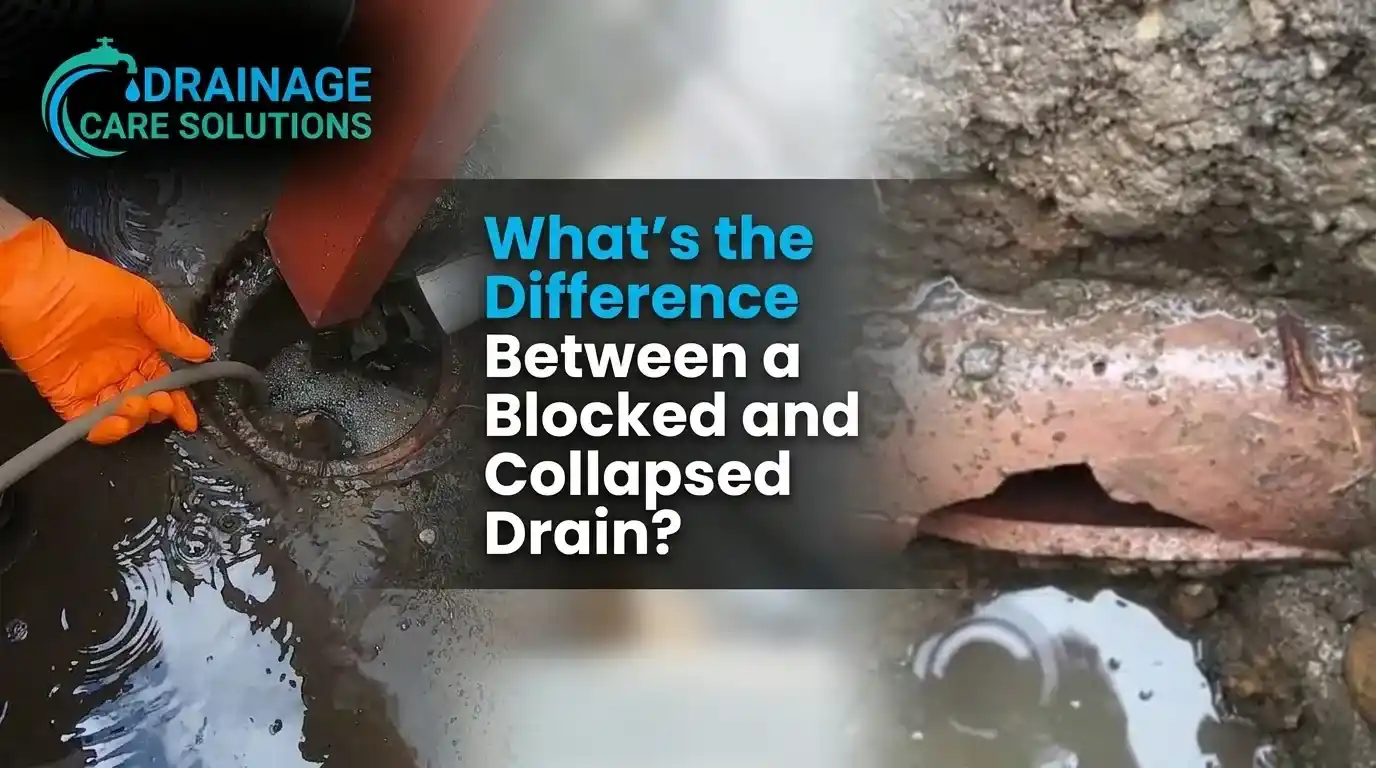

A drain that backs up again a few days after it was cleared, a patch of lawn that has started to sink, a smell of sewage in the garden that will not shift. These are the calls we get most often, and they point to the same thing. The pipe itself has failed rather than simply blocked. A collapsed drain will not clear with rodding or jetting, no matter how many times someone tries. It needs a camera to confirm what has happened and a structural repair to put it right. This guide covers both halves of the problem: how to spot a collapsed drain in Bournemouth, and exactly what happens next once you do.
How to Spot a Collapsed Drain: The Warning Signs
The clearest sign of a collapsed drain is a blockage that keeps coming back within days of being cleared. A structurally sound pipe stays clear once the obstruction is gone. A damaged one does not, because the fault is still there catching everything that passes.
Watch for these warning signs in particular:
- Blockages that return within days or weeks of clearing
- Several sinks, toilets or showers draining slowly at the same time
- Gurgling that carries on after the drain has been rodded
- Sewage smells outdoors, often stronger after rain
- Damp patches, soft ground or a sinkhole appearing over the drain run
- A bright green stripe of grass following the line of the pipe
- Rats or signs of rodent activity near gullies and manholes
If three or more of these match your property, you are most likely looking at structural damage rather than a simple obstruction.
Blocked or collapsed? The quick difference
A blocked drain is an obstruction inside a pipe that is still in one piece. A collapsed drain is physical damage to the pipe itself, so the repair is completely different. If you are not yet sure which one you are dealing with, our guide on the difference between a blocked and collapsed drain walks through a simple set of checks you can run before calling anyone out.
Is a Collapsed Drain an Emergency? What to Do First
A full collapse with sewage backing up into the property is an emergency and needs same-day attention. A partial collapse is less urgent and can usually wait a short while, but it should not be left for weeks, because the damage gets worse and the bill grows with it.
If a drain has collapsed and water is backing up, the first hour matters. Take these steps straight away:
- Stop running water inside the house. No flushing, no washing machine, no showers, since everything you use adds to a system that cannot take it.
- Keep the affected area clear and move anything valuable off the floor in rooms with a gully.
- Do not pour drain chemicals down a backed-up system. They can splash and make the eventual clean-up harder.
- Take photos of the flooding and the source if you can see it, as your insurer will want them.
- Call a drainage engineer. The earlier help is on the way, the smaller the damage. Our emergency drain repair team attends collapses across Bournemouth on the same day, day or night.
How a Collapsed Drain Is Confirmed
You cannot fix what you have not seen, and you should be wary of anyone who quotes for a collapse without looking first. The pipe is confirmed with a CCTV drain survey. The engineer feeds a small waterproof camera in through the nearest inspection chamber and follows the drain run on screen, recording the exact location and depth of the fault.
The survey produces a written report with WRc condition grading, the same standard that insurers, solicitors and mortgage lenders recognise. That report is what turns a guess into a plan, and it is the document your insurer will ask for if you make a claim. No honest repair quote should arrive before this step.
Why Drains Collapse in Bournemouth
Most collapses come down to the age of the pipe and the ground around it, and Bournemouth has a particular mix of both. Knowing what is under your property tells you a lot about what is likely to have gone wrong.
The common local causes are predictable. Many semis built between the 1950s and 1970s across Moordown, Kinson and Parkstone were laid with pitch fibre drainage, which deforms and eventually collapses into a sliver shape as it ages. Victorian homes in Boscombe and central Bournemouth tend to have clay pipework that cracks and shifts at the joints after a century in the ground. The sandy coastal soil found across the area lets the ground migrate around pipes that were not well bedded, which stresses the joints over time. Add root ingress from mature gardens and the occasional drain built over without proper support, and you have the bulk of the collapses we attend. Root damage is worth checking on older clay in particular, and a survey will show whether root ingress is part of the picture.
What Happens Next: The Repair Process Step by Step
Once you suspect a collapse, the path from here is straightforward, and knowing it removes a lot of the worry. The process runs in four clear stages.
First comes the survey and diagnosis, where the camera confirms the fault, its location and its severity. Second is the written quote, which sets out the repair method and the price before any work begins, so there are no surprises. Third is the repair itself, carried out using the method that suits the damage. Fourth is a post-repair CCTV check, where the engineer runs the camera through again to confirm the pipe is sealed and sound. That final check is your evidence the job was done properly.
How long does it take?
A survey usually takes one to two hours and the report follows shortly after. A patch repair is often a half-day job. A full reline can take a day depending on the length of pipe. Excavation and replacement takes longer, typically one to three days, since the ground has to be opened up and reinstated afterwards.
Collapsed Drain Repair Options Explained
The right repair depends entirely on the condition of the pipe, which is why the survey comes first. There are three main routes.
A patch repair fixes a single defect such as a cracked or displaced joint, using a short liner fitted inside the pipe at that point. Full relining, also called CIPP, installs a resin liner along a longer run to form a new pipe inside the old one, with no digging needed. Excavation and replacement is used where the pipe has lost its shape entirely and lining is not possible, since relining needs at least a partial pipe structure to bond to. Wherever the pipe allows, no-dig methods are preferable because they are faster, cheaper and leave your garden and driveway intact.
How Much Does Collapsed Drain Repair Cost in Bournemouth?
A collapsed drain is one of those repairs where the honest answer is that it depends, but you can still go in with realistic figures. Expect the CCTV survey to confirm the problem to sit in the region of £100 to £275, and many firms put that toward the repair if you go ahead. A patch repair for a single defect generally starts around £100 to £150. Full relining tends to run from roughly £850 upwards, often priced by the metre. Excavation and replacement is the most expensive route, commonly £1,500 to £3,000 for a straightforward job and more where the collapse is longer or harder to reach. As a rough guide, a minor collapse caught early often lands between £1,500 and £2,500, while a moderate one needing partial replacement is more likely in the £3,000 to £4,500 range.
Set any of those figures against the cost of leaving a collapse alone, where repeat clearances, water damage and eventual subsidence add up to far more. We explain the full scope before we start, so the figure you agree is the figure on the invoice.
What makes the price go up?
- How deep the drain is, since deeper pipes mean more excavation
- How easy the manholes and the run are to reach
- Whether the pipe is older clay or pitch fibre, which can need more extensive work
- The length of the collapsed section
- Reinstating a driveway, patio or concrete laid over the pipe
Who Pays for a Collapsed Drain?
This is worth settling before any money is spent. A drain that sits entirely within your boundary and serves only your home is your responsibility as the owner. A shared or lateral drain that serves more than one property is generally the responsibility of the water company, which across this area is Wessex Water, under the Water Industry Act. A terrace or semi is exactly where this gets blurred, so a survey that shows where the fault sits relative to your boundary can save a lot of back and forth, and sometimes the whole bill.
Does Home Insurance Cover a Collapsed Drain?
Sometimes, and it depends on the cause. Many home insurance policies cover sudden events such as ground movement, accidental damage and, in some cases, root ingress. Gradual wear and tear is usually excluded, which is where older clay and pitch fibre collapses can be harder to claim. Either way, the insurer will want evidence: a CCTV survey report showing the damage, a clear identification of the cause, and a repair quote. A proper survey gives you all three, which is another reason the camera comes before the spade.
Frequently Asked Questions
What are the first signs of a collapsed drain?
The earliest signs are blockages that return within days of clearing, several fixtures draining slowly at once, and gurgling that continues after rodding. Sewage smells outdoors, damp patches or a sinkhole over the drain run point more firmly toward structural collapse.
Is a collapsed drain an emergency?
A full collapse with sewage backing up into the property is an emergency and needs same-day attention. A partial collapse is urgent but can wait a short while. It should not be left for weeks, as the damage and the eventual cost both grow over time.
Can a collapsed drain be repaired without digging?
Often, yes. Patch repairs and full relining fix many collapses from inside the pipe with no excavation. The exception is a pipe that has lost its shape completely, where relining has nothing to bond to and excavation becomes the only option. A survey confirms which applies.
How much does it cost to fix a collapsed drain in Bournemouth?
Costs vary with the method and the access. A patch repair often starts around £100 to £150, relining from roughly £850, and excavation and replacement commonly £1,500 to £3,000 or more. A CCTV survey to confirm the fault first usually costs £100 to £275.
How long does a collapsed drain repair take?
A patch repair is often a half-day job and a full reline around a day, depending on the length of pipe. Excavation and replacement usually takes one to three days because the ground has to be opened and reinstated afterwards.
Who is responsible for a collapsed drain, me or Wessex Water?
If the drain sits within your boundary and serves only your home, it is your responsibility. A shared or lateral drain serving more than one property is generally Wessex Water’s responsibility under the Water Industry Act. A survey shows where the fault sits relative to your boundary.
Will my home insurance pay for it?
It depends on the cause and your policy. Sudden ground movement and accidental damage are often covered, while gradual wear and tear is usually excluded. Insurers require a CCTV report, a clear cause and a repair quote before approving a claim.
Collapsed Drain in Bournemouth? Get a Same-Day Assessment
Think your drain has collapsed? Stop paying for clearances that will not hold.
Drainage Care Solutions diagnoses and repairs collapsed drains across Bournemouth, Poole and every BH postcode. We confirm the problem on camera, explain it in plain English, and quote in writing before any work starts.
- Same-day attendance across BH1 to BH11, day or night
- CCTV diagnosis with a clear written report
- No-dig repair wherever the pipe allows
- Honest fixed pricing with no charges added afterwards
Call now on 07717 561588 or request a free quote through our contact page. The longer a collapse is left, the bigger the bill, so get it confirmed today.