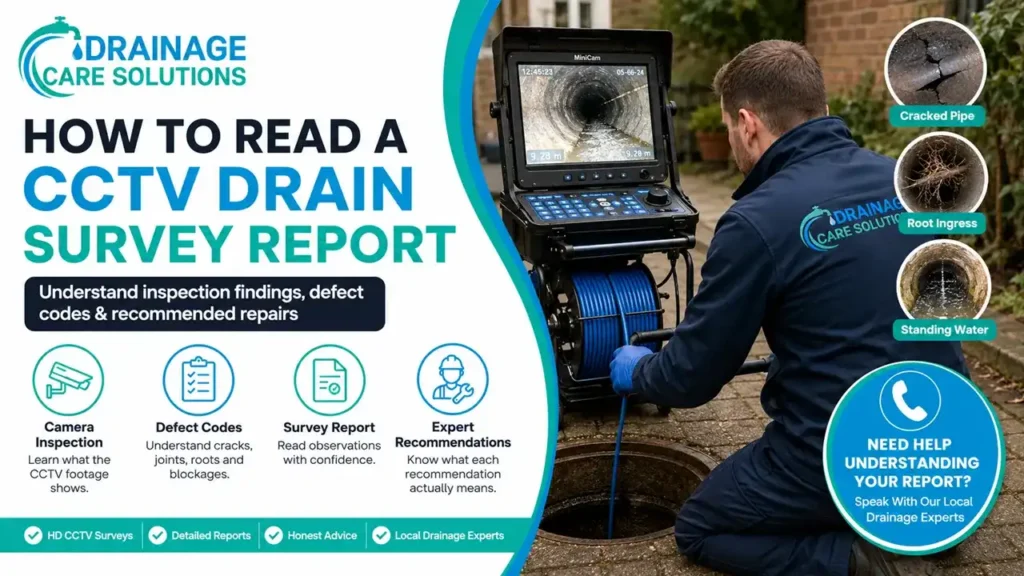
A CCTV drain survey report can look technical at first, but most reports follow a logical path: where the camera entered, which pipe was inspected, what the camera found and what action the drainage engineer recommends.
Drainage Care Solutions helps homeowners, landlords, property buyers and property managers in Bournemouth understand underground drainage problems. This guide explains how to read a CCTV drain survey report without assuming that every code, crack or deposit means the whole drain needs replacing.
Read the Survey Summary Before the Observation Log
Start with the summary page rather than watching the full footage immediately. The survey summary should explain why the inspection was carried out, which parts of the drainage system were examined and the main findings.
Look for a brief description of the overall condition, any defects that affect water flow and any sections that couldn’t be inspected. The report may also separate urgent recommendations from maintenance work or further checks.
Report formats vary between drainage companies and survey types. Some contain detailed codes and grades, while others rely more heavily on written observations, still photographs and recorded footage.
Find Out Exactly Which Drain Was Inspected
A report only describes the pipework reached by the camera. Before interpreting a defect, confirm the access point, survey direction and section of drain covered.
| Report Entry | What It Tells You | What to Check |
| Manhole or Chamber Reference | Where the camera entered the system | Match the reference to the site plan |
| Upstream or Downstream | The direction the camera travelled | Check which fixtures or chambers connect to that run |
| Inspection Distance | How far the defect is from the starting point | Confirm the measurement starts from the stated access point |
| Pipe Material | Whether the drain is clay, PVC, pitch fibre, concrete or another material | Different materials can show different faults |
| Pipe Diameter | The approximate internal width of the pipe | Check whether the pipe size changes along the run |
| Survey End Point | Where the inspection stopped | Note whether the camera reached the next chamber |
If you’re still at the stage of arranging an inspection, a professional drain camera inspection can record the pipe route, visible defects and sections that need closer attention. Drainage Care Solutions should only be asked to explain pipework that was actually reached and recorded during the inspection.
Use the Observation Log Alongside the Footage
The observation log is the written timeline of the inspection. Each entry should correspond to a point in the camera footage and normally includes a distance, defect description and image reference.
A note at several metres downstream, for example, means the issue was recorded that distance from the named chamber or access point. The distance helps an engineer locate the affected area from ground level, but it may not provide an exact excavation point without further tracing.
Read the observation log with the footage open where possible. The written description tells you what the engineer identified, while the image shows the size, position and extent of the finding.
Understand What the Codes and Grades Actually Mean
Some CCTV drainage reports use formal defect codes or condition grades. These can describe the type of fault, its position within the pipe and its effect on structural condition or normal flow.
What Is a Defect Code?
A defect code is shorthand for an observation such as a crack, displaced joint, root ingress or deposit. Coded inspections may follow recognised classification systems, including systems associated with the WRc Manual of Sewer Condition Classification and BS EN 13508-2.
Do not assume that Drainage Care Solutions or another contractor uses a particular coding system unless the report states this. If the code legend is missing, ask the drainage engineer to explain each abbreviation.
What Is a Condition Grade?
A condition grade is intended to show how serious a defect or group of defects may be. Some reports grade structural condition separately from serviceability, while others use a simpler priority scale.
Never read the grade in isolation. Check the report legend, defect type, pipe material, affected length and recommendation before deciding what the grade means for that particular drain.
Separate Structural Defects from Flow Problems
A useful CCTV drain survey report distinguishes damage to the pipe itself from issues affecting how well the drain works.
Structural Findings
Structural defects affect the physical condition of the underground pipework. Examples include fractures, deformation, displaced joints, corrosion, lining damage and collapsed sections.
The seriousness depends on the size and extent of the defect, the pipe material, the surrounding ground and whether the damage is getting worse. A small localised fault may need a targeted repair, while widespread deterioration may justify relining or replacement.
Serviceability Findings
Serviceability problems restrict flow or increase the chance of another blockage. Grease, silt, scale, debris, roots and standing water can fall into this category.
A pipe may remain structurally intact but still perform poorly. Cleaning may restore flow, though repeated deposits can point to a displaced joint, poor gradient, deformation or another underlying issue.
Translate Common Findings into Plain English
Technical descriptions are more useful when you understand what they mean for the drain in everyday terms.
- Cracked or Fractured Pipe: The pipe wall has split. The report should show the size, position and length of the damage before a repair method is recommended.
- Displaced Joint: Two pipe sections are no longer aligned correctly. The resulting step or gap may catch waste, allow leakage or give roots a route into the drain.
- Open Joint: A visible gap has formed between connected pipe sections. The pipe may still carry water, but the opening can admit roots or surrounding groundwater.
- Root Ingress: Roots have entered through a joint, crack or damaged connection. Minor strands may cause little immediate restriction, while a dense root mass can contribute to repeated blockages.
- Grease or Scale Deposits: Material has built up on the pipe wall and reduced its internal diameter. Cleaning may be recommended before the pipe is inspected again.
- Silt or Debris: Loose material has settled inside the drain. The engineer should consider why it collected, especially if the same problem keeps returning.
- Standing Water: Water remains in part of the pipe instead of draining away fully. Possible reasons include poor fall, deformation, a low section or a downstream obstruction.
- Pipe Deformation: The pipe has changed shape, which is often relevant with pitch fibre or flexible materials. The report should state how much of the bore appears restricted.
- Water Infiltration: Groundwater is entering through a defect. The report should identify the entry point and whether the flow is active or only visible as staining.
- Collapsed Drain: Part of the pipe has lost its shape or fallen in, preventing the camera or wastewater from passing normally. Further investigation is usually required.
When a report records roots, the guide to identifying root ingress inside drainpipes explains how roots enter through weaknesses and why removal alone may not deal with the opening that allowed them inside.
Compare the Technical Note with the Plain Meaning
A single report line can contain several pieces of information. Break it into the defect, location, likely effect and proposed response.
Technical Finding:
Root ingress identified at an open joint around six metres downstream from the inspection chamber.
Plain-English Meaning:
Plant or tree roots have entered through a gap between two sections of pipe. The roots may restrict flow and contribute to repeated blockages if they are removed without dealing with the open joint.
Useful Follow-Up Question:
Does the joint need monitoring, a local patch, relining or excavation after the roots have been cut away?
The same method works for cracks, deposits, displaced joints and standing water. Ask what was found, where it is, how much of the pipe is affected and why the recommended action suits that defect.
Decide How Serious Each Finding May Be
Not every defect needs immediate excavation. The appropriate response depends on the risk of blockage, leakage, further deterioration and damage to the surrounding property.
| Finding Level | Typical Report Meaning | Possible Next Step |
| Observation Only | A feature is visible but isn’t currently affecting the drain | Record and monitor |
| Maintenance Issue | Deposits, minor roots or debris are affecting flow | Cleaning, root cutting or planned maintenance |
| Localised Defect | A crack, open joint or damaged connection affects one area | Patch repair, local repair or further assessment |
| Wider Structural Concern | Several defects or a long damaged section are present | Relining, excavation or replacement assessment |
| Immediate Restriction | The camera cannot pass or wastewater flow is seriously affected | Prompt investigation and suitable repair |
This table is a reading guide, not a universal grading system. The engineer’s recommendation should reflect the actual footage, pipe material, location and condition of the surrounding drainage run.
A dramatic-looking crack may be stable and localised, while a less obvious displaced joint may repeatedly catch waste. Severity comes from context rather than the name of the defect alone.
Check the Footage for Context the Code Cannot Show
Codes and grades summarise findings, but footage shows how the defect sits within the pipe. Watch the section before and after the observation rather than pausing only on the selected still image.
Look at how much of the pipe opening is restricted, whether water continues to flow and whether the camera passes the defect freely. A report should also help you understand whether the issue affects one point or continues along a longer section.
Still photographs are helpful evidence, though they can make deposits or cracks look larger without a sense of scale. Ask the engineer to replay unclear footage and explain what you are seeing.
Pay Attention to Survey Limitations
A CCTV report cannot confirm the condition of a section the camera couldn’t reach. Obstructions, tight bends, heavy deposits, collapsed pipework and inaccessible chambers may stop the survey before the full run is inspected.
The limitations section should state where the inspection ended and why. It may recommend cleaning, creating another access point or carrying out a follow-up survey after the obstruction has been removed.
Do not assume that an unrecorded section is defect-free. The report can only describe visible pipework within the camera’s reach and field of view.
Read the Recommendations as Options, Not Automatic Instructions
Recommendations should connect directly to the recorded findings. Ask why each action has been suggested and what problem it is intended to solve.
- High-Pressure Water Jetting: Used to remove grease, silt, scale and loose debris so normal flow can be restored or the pipe can be inspected more clearly.
- Root Cutting: Removes roots restricting the pipe, though the entry point may still need repair.
- Patch Repair: Treats a localised defect without lining the full drain run.
- Drain Relining: Creates a new lining inside a damaged pipe where the existing structure and access allow it.
- Excavation: Opens the ground to repair or replace pipework where a no-dig method is unsuitable.
- Monitoring: Records a minor or stable defect for review if symptoms develop or the condition changes.
- Further Investigation: May involve cleaning, tracing, another access point or a follow-up CCTV inspection.
The final repair plan may change after cleaning or closer investigation. A deposit can hide a crack, while a suspected collapse may turn out to be a local obstruction once the pipe is cleared.
Know What the Report Cannot Decide
A CCTV drain survey report provides visual evidence, but it does not automatically settle every legal, financial or practical question.
The report alone may not confirm pipe ownership, responsibility between neighbours, insurance liability, landlord or tenant responsibility, or the condition of inaccessible sections. It also cannot determine the final repair method without considering depth, access, pipe material and surrounding ground.
Responsibility may depend on where the pipe sits and whether it serves one property or several. Keep the survey findings separate from the later question of who is responsible for acting on them.
Questions to Ask About Your CCTV Drain Survey Results
What Do the Drain Survey Results Mean?
The results describe the visible condition of the inspected pipework. Read the summary, observation log, footage and recommendations together rather than relying on one code or still image.
Does Every CCTV Report Use the Same Codes?
No. Formats and coding systems vary between contractors and survey types. Check the report legend and ask the engineer to explain any code, abbreviation or grade that isn’t defined.
How Serious Is Root Ingress?
A few fine roots may have limited effect, while a dense root mass can restrict flow and cause recurring blockages. The report should also identify the crack or joint that allowed the roots to enter.
Does a Cracked Drain Always Need Replacing?
No. The correct repair depends on the crack’s size, position, extent, pipe material and surrounding condition. Some local defects may be suitable for patching or relining.
What Does Standing Water Mean in a Drain Report?
Standing water means part of the pipe isn’t draining fully during the inspection. It can be linked to a low section, poor fall, deformation or a downstream restriction.
What Happens if the Camera Cannot Inspect the Full Drain?
The report should record where the survey stopped and why. Cleaning, another access point or a follow-up inspection may be recommended before the unseen section can be assessed.
Can the Report Confirm Who Owns the Damaged Pipe?
Not by itself. The footage can show where a defect is located, but ownership and repair responsibility depend on the drainage arrangement and where the private drain joins shared or public pipework.
What Should I Do if the Recommendation Is Unclear?
Ask the drainage engineer to show you the relevant footage and explain the defect in plain English. You should understand what has been found, why action is suggested and whether further investigation is needed.
Ask for Clarification Before Approving Drain Work
A useful CCTV drainage report should help you connect every recommendation to visible evidence. Before agreeing to work, check the defect location, affected length, pipe material, reported severity and any survey limitations.
Drainage Care Solutions can help customers in Bournemouth and surrounding areas understand CCTV drain survey findings and discuss suitable next steps. You can speak with local drainage specialists in Bournemouth when footage, codes or repair recommendations need explaining. A report does not automatically establish pipe ownership, so check the drainage layout and refer to this sewer responsibility guide if responsibility remains unclear.