Outside kitchen drains in Bournemouth homes block more often than any other domestic drain in the property. The reason is simple. Everything that goes down the kitchen sink, including grease, fat, food waste, soap, and silt, ends up in that single outside gully or trapped gully before reaching the main drainage run. When the build-up gets thick enough, the water stops flowing and the smell starts.
Learning how to unblock outside kitchen drain problems yourself saves time and stress on most occasions, especially if you catch it early. This guide walks through the actual mechanism of how kitchen drains block, the methods that genuinely work, the methods that waste your time, and the warning signs that mean it’s time to call a professional. At Drainage Care Solutions we deal with blocked kitchen drains across Boscombe, Westbourne, Southbourne, Winton, and the wider BH postcode area every week.
Why Does My Outside Kitchen Drain Keep Blocking?
Your outside kitchen drain keeps blocking because kitchen wastewater carries grease, fat, food particles, and detergent residue that solidify as the water cools. Inside the warm sink everything looks liquid. Once it hits the cold gully outside, fat turns solid and starts coating the pipe walls. Over weeks and months, it builds into the dense, foul-smelling blockage that finally stops the water flowing.
The most common causes in UK kitchens:
- Grease and fat build-up: the single biggest cause, forming fatbergs in cold pipework.
- Food waste: rice, pasta, coffee grounds, vegetable peelings caught in traps.
- Soap and detergent scum: binds with fat to create a hard coating.
- Silt and grit: especially in older Bournemouth properties with Victorian clay drainage.
- Tree root ingress: through small cracks in clay or pitch fibre pipes.
- Leaves and outdoor debris: entering through uncovered gully grates.
Knowing what caused the block determines how to unblock outside kitchen drain pipework properly. A grease blockage clears with hot water and a chemical action. A root or collapsed pipe needs professional equipment.
How Do You Diagnose an Outside Kitchen Drain Blockage?
You diagnose an outside kitchen drain blockage by checking three things in sequence. First, lift the gully cover and see if water sits stagnant in the chamber. Second, run the kitchen tap and watch whether new water reaches the gully. Third, check whether other drains in the house are also slow. The answers reveal whether the blockage sits in the gully itself, the pipe run, or further down the system.
The Three-Test Diagnosis
- Lift the gully cover: if the chamber is full and stagnant, the run beyond it is blocked.
- Run the kitchen tap: if water reaches the gully but then sits there, the block is downstream.
- Check other drains: if the bath, toilet, or other gullies are also slow, the issue sits in the shared run.
This three-test approach tells you whether to focus your unblocking efforts on the gully alone or deeper into the drainage system.
What’s the Best DIY Method to Unblock a Kitchen Drain?
The best DIY method to unblock outside kitchen drain pipework starts with mechanical removal of debris from the gully, followed by hot water flushing, then a baking soda and white vinegar treatment if needed. Avoid harsh chemical drain cleaners, which damage pipe seals and joints. Work from gentlest to firmest, escalating only as needed.
The DIY Method Ladder
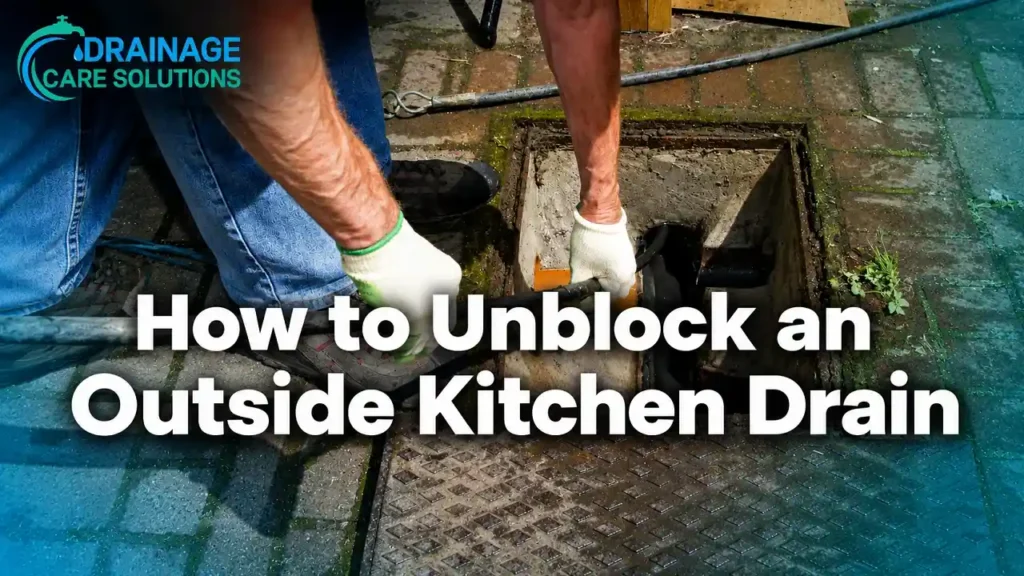
- Mechanical removal: lift the gully cover, scoop out debris with gloves and a small bucket.
- Hot water flush: kettle of hot (not boiling) water poured slowly into the gully.
- Baking soda and white vinegar: half a cup of baking soda followed by half a cup of vinegar, leave for 30 minutes, then flush with hot water.
- Plunger: a cup or accordion plunger over the gully to dislodge a soft blockage.
- Drain rod or auger: for blockages further into the run, used carefully through the access point.
Boiling water can crack older clay pipework and melt plastic joints, so hot tap water or kettle water cooled slightly is the safer choice. Aggressive chemical drain cleaners often cause more long-term damage than the original blockage.
Blocked Drain Refusing to Clear?
Drainage Care Solutions provides same-day blocked drain clearance Bournemouth with high-pressure water jetting that removes grease, fat, food waste, and silt cleanly without damaging your pipework. Call us or book a same-day drainage assessment right now.
What If the DIY Method Doesn’t Work?
If DIY methods don’t clear the blockage within an hour or two, the cause sits beyond what hot water and a plunger can reach. This often means grease has hardened along several metres of pipework, food waste has compacted into a solid mass, or the pipe itself has a structural fault preventing clearance. At this stage, knowing how to unblock outside kitchen drain problems means recognising when to call a professional rather than risk damage.
Signs the DIY Approach Has Hit Its Limit
- Water still sits in the gully after multiple hot water flushes.
- The smell gets worse despite repeated treatment
- Other drains start backing up at the same time.
- You hear gurgling from indoor sinks or toilets when you flush the kitchen drain.
- The block keeps returning within days of clearing.
These are all signals that the problem is structural or sits deeper in the drainage run than home methods can reach. Professional high-pressure drain jetting clears the full pipe in minutes where home methods couldn’t shift it in hours.
When Should You Call a Drainage Engineer?
You should call a drainage engineer when the blockage returns repeatedly, when multiple drains are slow at once, when smells persist after clearing, or when you suspect tree roots or a collapsed pipe. These signs point to structural drainage problems that need professional diagnosis and equipment rather than home methods.
What a Professional Engineer Does Differently
- High-pressure water jetting: clears grease, fat, and roots cleanly.
- CCTV drain inspection: identifies cracks, root ingress, and pipe condition.
- No chemical damage: unlike harsh shop-bought drain cleaners.
- Single-visit resolution: diagnosis and clearance in one appointment.
- Honest assessment: of whether the block is one-off or symptomatic of a deeper issue.
In Bournemouth properties built between 1950 and 1970, pitch fibre drainage is a common cause of repeated blockages because the material deforms over time. A professional CCTV drain survey Bournemouth service quickly identifies whether the pipe needs lining, patch repair, or replacement.
For landlords, the timing of professional intervention also matters legally. Under Section 11 of the Landlord and Tenant Act 1985, landlords are required to keep drainage systems in proper working order, and delayed action on a known blockage can expose you to disrepair claims from tenants. Acting on the warning signs above protects both the property and your legal position.
How Do You Prevent Outside Kitchen Drain Blockages?
You prevent outside kitchen drain blockages by stopping grease and fat going down the sink, fitting a sink strainer to catch food particles, flushing the drain with hot water weekly, and arranging periodic maintenance jetting on older pipework. Prevention is far cheaper and less disruptive than emergency clearance.
Prevention Checklist
- Never pour grease or fat down the kitchen sink, even with hot water.
- Wipe greasy pans with kitchen roll before washing.
- Fit a sink strainer: catches food waste before it enters the pipe.
- Weekly hot water flush: dissolves early grease build-up.
- Check the outside gully monthly: clear leaves and debris from the grate.
- Annual maintenance jetting: for older properties with clay or pitch fibre drainage.
Knowing how to unblock outside kitchen drain pipework matters less when prevention keeps the system clear in the first place.
Sorting Your Outside Kitchen Drain Problem the Right Way
Most outside kitchen drain blockages clear with a careful DIY approach and patience. The cases that don’t almost always point to grease that’s hardened deep into the run, food waste compacted beyond reach, or a structural issue with the pipe itself. Knowing how to unblock outside kitchen drain pipework means recognising both what you can fix yourself and when to bring in professional equipment.
Drainage Care Solutions provides same-day attendance, honest assessment, and clean professional work across Bournemouth, Poole, Christchurch, and the BH postcode area. Call or get a free drainage quote when you need a definitive answer.