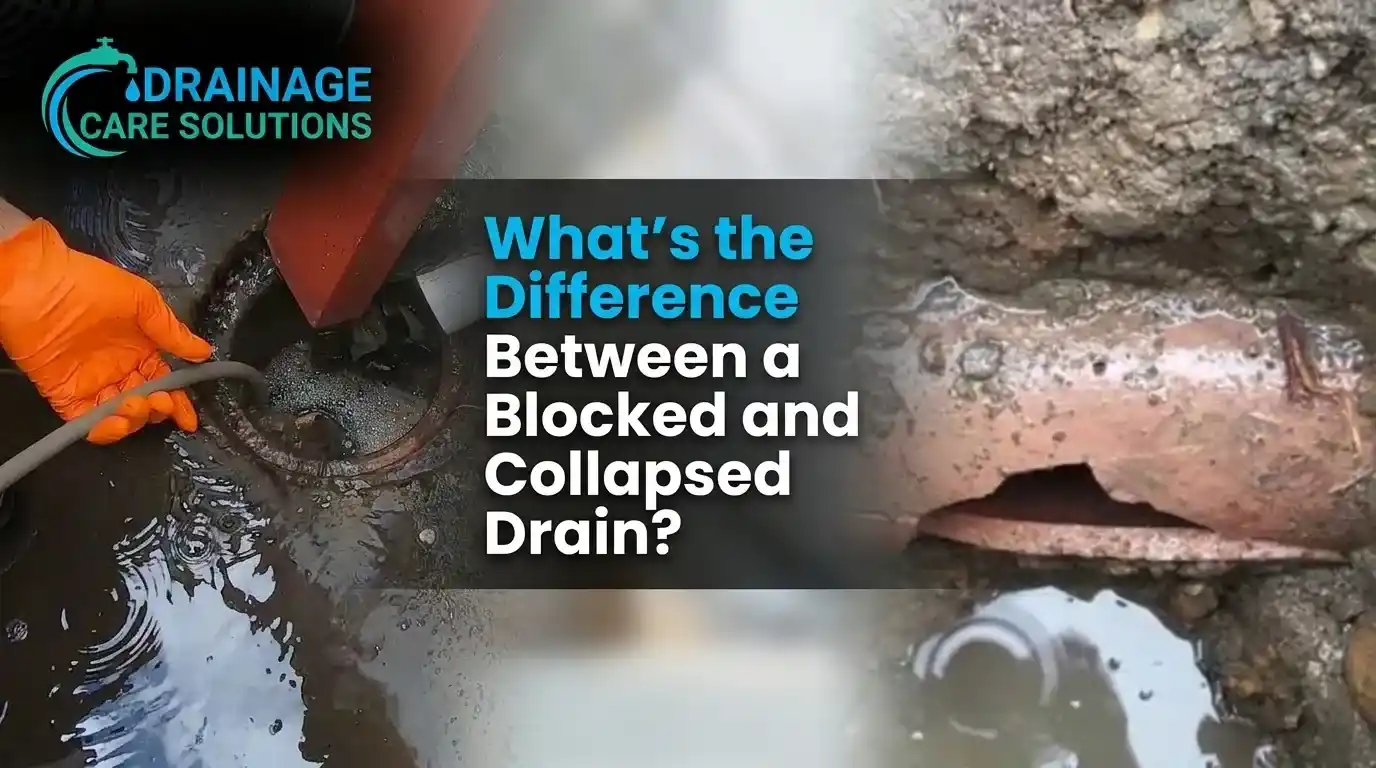

An underground drain leak may be suspected when wastewater escapes through a crack, fracture, failed connection or open joint below ground. Possible clues include a persistent sewage smell, unusually wet or soft soil, local ground settlement and recurring drainage problems.
None of those signs confirms a leak by itself. Rainfall, groundwater, blockages and other faults can create similar symptoms, so the drainage system normally needs investigating before structural repair is recommended.
What an Underground Drain Leak Actually Is
A foul-water drain is designed to carry wastewater from toilets, sinks, baths, showers and appliances towards the sewer through an enclosed pipe system.
If the pipe wall or a connection opens, some wastewater can escape into the surrounding ground instead of remaining inside the drain.
The technical term for water escaping out of a drainage pipe is exfiltration.
That is different from infiltration, where groundwater enters the pipe through a crack, open joint or another defect.
A damaged pipe can experience either problem, and sometimes both, depending on groundwater levels and the condition of the drain.
A Drain Can Leak Even While Everything Still Flushes
This is one of the most important distinctions for homeowners.
A leaking drain does not have to be completely blocked or collapsed.
A small fracture or gap at a joint may allow wastewater to escape while most of the flow continues downstream. Toilets may still flush normally and sinks may still empty, particularly when the defect has not significantly reduced the internal diameter of the pipe.
The reverse is also true. A structurally sound drain can become blocked by grease, wipes, debris or other material without wastewater leaking through the pipe wall.
If flow problems keep returning after clearance, the separate guide to underlying causes of recurring blockages explains why a repeated blockage can sometimes point to a deeper pipe defect.
Read Above-Ground Clues as Evidence, Not Proof
Because the pipe is buried, homeowners usually notice changes above ground before they know what is happening inside the drain.
The pattern matters more than any single symptom.
| Sign | What It Could Indicate | Does It Confirm a Drain Leak? |
| Persistent sewage smell outdoors | Wastewater escape or another drainage fault | No |
| Wet or soft ground during dry weather | Drain leakage, groundwater or another water source | No |
| Sunken paving or a shallow depression | Local soil movement or washout | No |
| Recurring drainage trouble | Structural or serviceability defect | No |
| Crack visible on CCTV | Physical pipe damage | Not necessarily active leakage |
| Open or displaced joint | Possible route for exfiltration or infiltration | Requires assessment |
| Wastewater visible above ground | Significant drainage problem | Prompt investigation required |
Wet Ground That Does Not Match the Weather
A patch of garden or soil that remains unusually wet when surrounding ground is dry can justify investigation, particularly if it follows the route of known foul drainage.
It still has other possible explanations, including groundwater, surface-water drainage or a clean-water leak.
A Sewage Smell Concentrated in One Area
A persistent foul-water odour near an inspection chamber, patio, garden or drain route can suggest that wastewater is reaching somewhere it should not.
Odour alone is not enough to locate the defect. A smell can also come from an accessible chamber, venting issue, blockage or another drainage problem.
Ground Beginning to Dip or Paving Moving
Persistent leakage can sometimes carry fine material away from around a damaged pipe.
If enough soil is lost, local settlement may develop as a shallow depression, soft patch or movement in paving.
That does not mean every sunken area has been caused by drainage. If serious pipe failure rather than leakage is suspected, the guide to signs that a drain has structurally failed covers that separate problem.
What Creates an Opening for Wastewater to Escape?
The visible symptom may be above ground, but the fault itself is usually a physical weakness somewhere in the buried pipework.
Cracks and Fractures
Rigid pipework can crack because of ground movement, external loading, ageing, root pressure or previous disturbance around the drain.
The seriousness depends on the position and extent of the fracture rather than the word “crack” alone.
Open or Displaced Joints
Sections of pipe are joined together along the drain run. If those sections move apart or lose alignment, a gap can develop.
That opening may allow wastewater out, groundwater in and roots to exploit the weakened joint.
Root Ingress
Roots commonly enter drains through an existing weakness such as a joint, fracture or damaged connection.
Once inside, root growth can widen an existing defect, restrict flow and collect waste, which means leakage and recurring blockage can occur together.
Movement Around the Pipe
Changes in ground support can place stress on drainage pipework and its joints.
Poor support, settlement or disturbance during other building work may contribute, although the actual cause should not be assigned without evidence from the affected drain.
Pipe material also matters, but age or material name alone does not prove a leak. Clay, pitch fibre, plastic and older metal systems can develop different types of defect depending on their condition and installation.
Drain Leak or Water-Supply Leak?
These two problems are often confused because both can create unexplained wet ground.
A foul drain normally carries wastewater by gravity. A domestic water-supply pipe carries clean mains water under pressure.
That difference changes the useful clues.
With a drainage leak, a sewage odour, drainage symptoms and a known foul drain route may support suspicion.
With a water-supply leak, continuous clean-water escape, changes in metered consumption or alterations in mains pressure may be more relevant.
A high water bill or low mains pressure should therefore not be treated as a primary sign of a leaking wastewater drain.
If the source of the wet ground is uncertain, establish which buried service runs through the affected area before assuming that the drainage system is responsible.
How Does Suspicion Become Evidence?
A useful investigation moves from the least invasive evidence towards more direct confirmation.
1. Match the Symptom to the Drainage Route
The location of odour, soft soil or settlement is compared with accessible chambers and the likely drain run.
This establishes whether the drainage system is a plausible source rather than proving that it is leaking.
2. Inspect the Pipe Internally
A camera can identify structural features that cannot be seen from ground level.
Drainage Care Solutions provides CCTV inspection of underground pipework in Bournemouth, where a hidden fault may involve cracks, fractures, displaced joints, deformation or root ingress. The current service page confirms that CCTV is used to investigate hidden drainage faults before repair options are chosen.
3. Decide Whether More Evidence Is Needed
The camera finding must be interpreted alongside the symptoms.
If the footage does not establish whether wastewater is actually escaping, further investigation may sometimes be required. That can include additional testing or, where justified, direct access to a particular section.
The repair decision should follow the evidence rather than the first dramatic-looking camera image.
Can CCTV Prove That the Drain Is Leaking?
Not always.
A CCTV survey is very useful for finding visible structural defects, but a camera sees the inside surface of the pipe. It may show a crack, open joint, displaced connection, root ingress, deformation or a collapsed section.
A visible crack does not automatically prove that wastewater is currently passing through it into the soil.
Standing water, deposits or restricted access can also hide parts of the pipe.
This is why the drainage engineer has to connect the footage with the symptoms and pipe condition. Drainage Care Solutions’ guide to understanding findings in a CCTV drain report also distinguishes structural defects from serviceability problems and explains the limitations of footage that cannot reach or clearly show every section.
The Defect Should Decide the Repair, Not the Symptom
Once an underground drain leak has been investigated, there is still no universal repair method.
A small localised defect is different from widespread deterioration, a badly displaced joint or a pipe that has completely lost its shape.
Localised Repair
An isolated crack or failed joint may sometimes be suitable for a targeted repair where the surrounding pipe remains serviceable.
Structural Relining
A longer damaged section may be suitable for lining where the original pipe still provides a continuous, usable host structure.
The dedicated guide to when structural drain relining may be suitable explains the method and its limitations in more detail. The existing article correctly notes that complete collapse, severe displacement or a missing section can prevent lining from being suitable.
Excavation and Replacement
Direct excavation may be considered where a pipe has collapsed, shifted too far out of alignment, lost a section or cannot be repaired reliably from within.
The wording matters here: those conditions may require excavation. They should not be assumed before the drain has been assessed.
When Does a Suspected Leak Need Faster Attention?
Not every hidden drainage defect is an emergency, but some symptoms justify prompt investigation.
A persistent smell with no backup is different from wastewater appearing at ground level.
Rapidly sinking ground, sewage flooding, wastewater backing into the property, inability to use toilets or drains, or suspected major structural failure require greater urgency.
Drainage Care Solutions provides professional drain repairs for damaged underground pipework in Bournemouth. Its current repair service covers fractured pipes, displaced joints, collapsed drainage and assessment before the repair method is agreed. Drainage Care Solutions
Who Is Responsible if the Leaking Pipe Is Found?
Responsibility depends on which part of the drainage system contains the fault.
In the Wessex Water region, a property owner is usually responsible for private drainage serving only their property up to the boundary or the point where it connects with shared pipework, whichever comes first. Most shared drains and the public sewer network are maintained by Wessex Water.
Wessex Water’s current sewer pipe responsibility guidance is a useful external reference for Bournemouth homeowners trying to establish whether a confirmed defect sits on private or public drainage.
Ownership should be established before substantial repair work is authorised where the drain route or boundary is uncertain.
Underground Drain Leak FAQs
What Are the Signs of an Underground Drain Leak?
Possible signs include persistent foul odours, wet or soft ground, local soil settlement and repeated drainage problems. These symptoms suggest investigation but do not confirm leakage on their own.
Can a Drain Leak Without Being Blocked?
Yes. Wastewater can escape through a crack or open joint while enough of the pipe remains clear for normal flow to continue.
Can Tree Roots Cause a Drain to Leak?
Roots often enter through existing joints or defects and can worsen damage once established. Root ingress can therefore occur alongside leakage and recurring blockages.
Can a Leaking Drain Cause a Sinkhole?
Persistent leakage can sometimes wash fine material away and contribute to local ground settlement. Not every leak causes a sinkhole, and not every depression or subsidence problem is drainage-related.
Does Every Cracked Drain Need Replacing?
No. The response depends on the crack, pipe condition, movement, location and whether leakage or other performance problems are occurring.
Can a Leaking Drain Be Repaired Without Digging?
Sometimes. Patch repair or structural lining may be suitable where the damaged pipe retains enough structure and access is available.
Can CCTV Always Find the Leak?
No. CCTV can reveal visible internal defects, but deposits, standing water, inaccessible sections and the limits of the camera view can prevent it from proving active leakage in every case.
Find the Defect Before Choosing the Repair
An underground drain leak is difficult to diagnose from the surface because the same wet patch, smell or drainage problem can have several causes.
The useful sequence is to identify the pattern, establish whether foul drainage is a credible source, inspect the buried pipework and determine whether the defect is actually capable of allowing wastewater to escape. Only then should patch repair, lining, excavation or another response be considered.
Drainage Care Solutions investigates hidden drainage faults across Bournemouth and surrounding areas. Where a suspected leak is associated with cracked, fractured or displaced underground pipework, the appropriate repair can be based on the condition found rather than an assumption that every leak needs excavation.